

DATA INTELLIGENCE
Turn the catalog into answers for IT, finance, and governance alike.
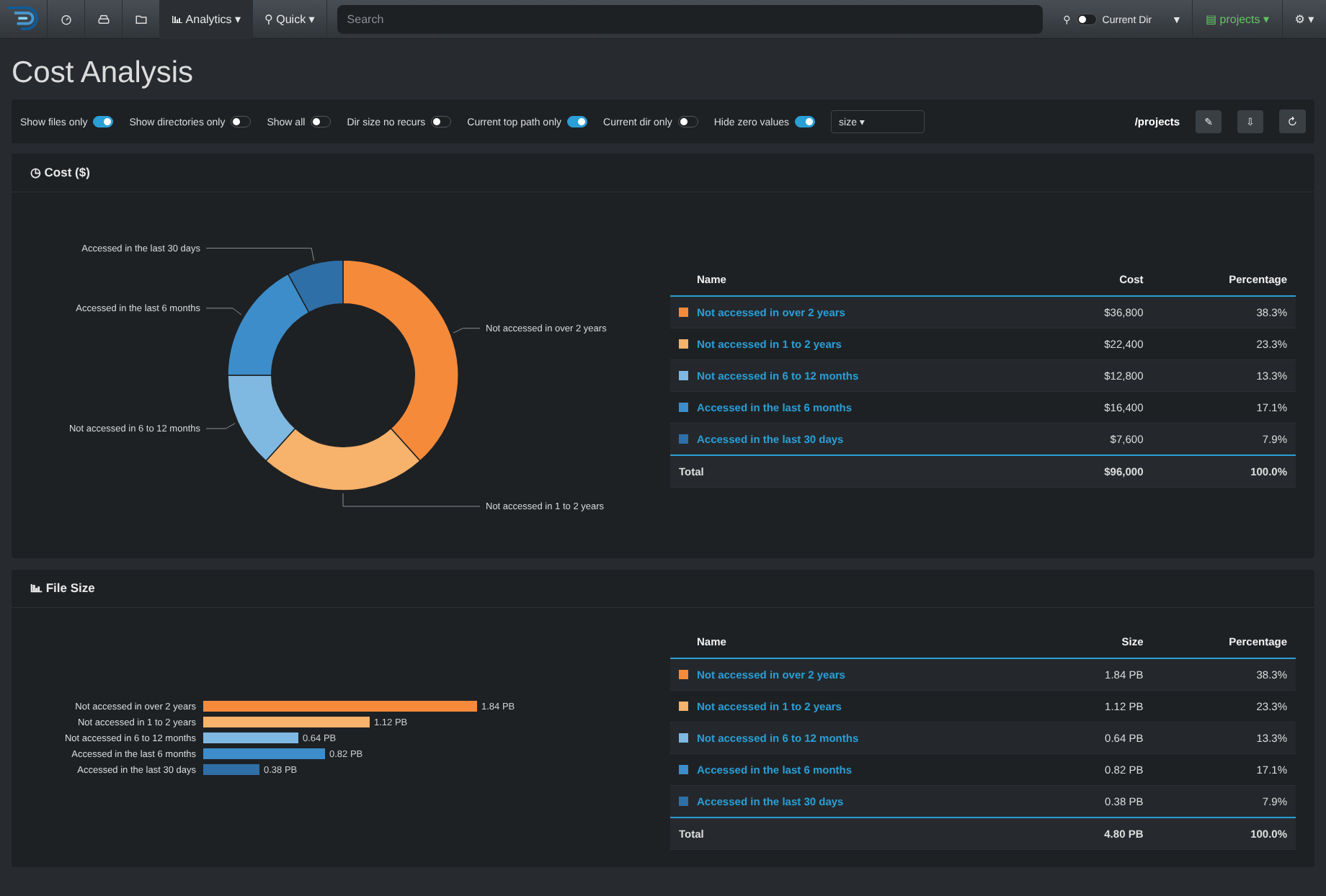
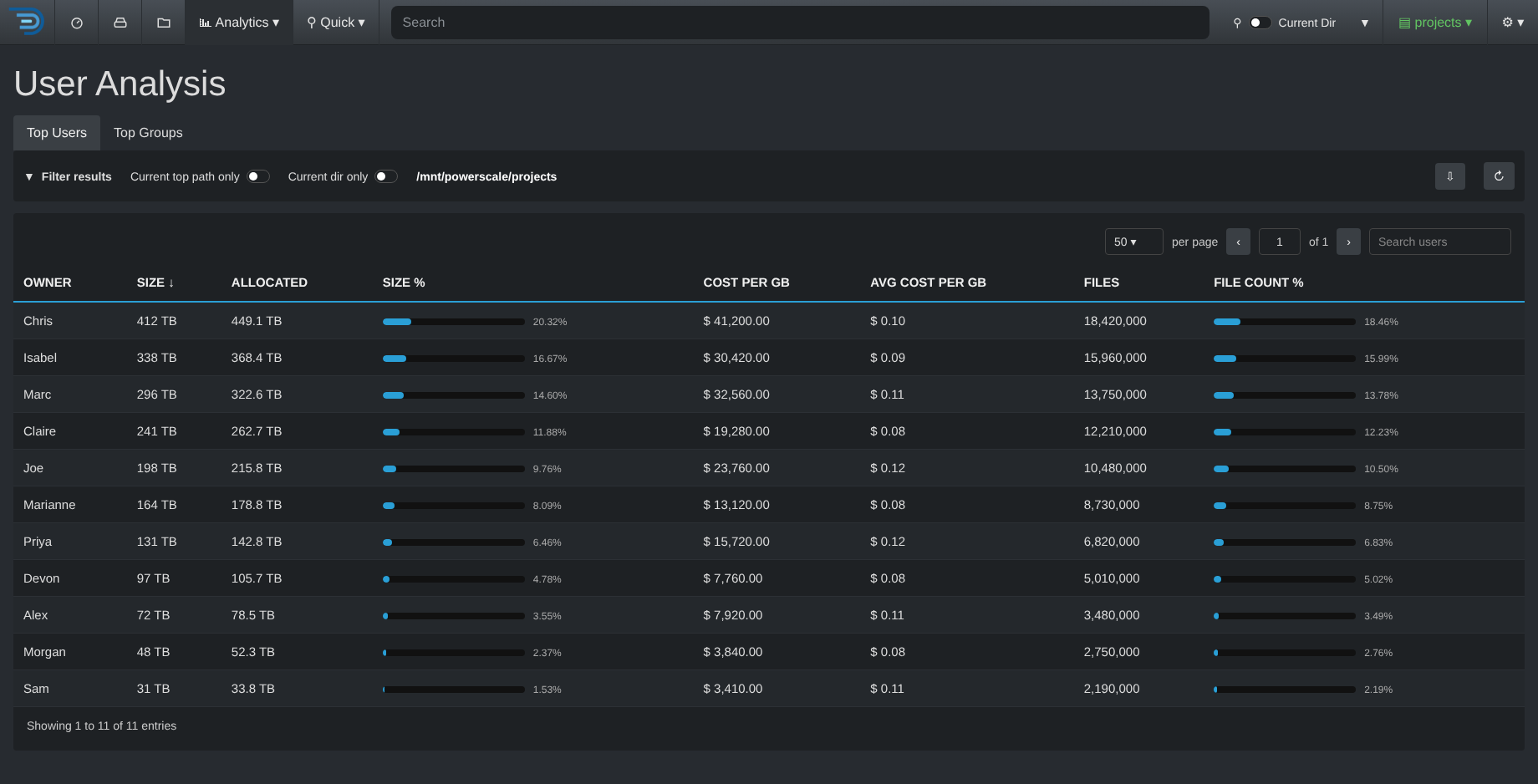
Data intelligence turns the Diskover catalog into dashboards, reports, heatmaps, and cost analysis. See what is growing, what has gone cold, what each team’s storage costs, and what changed since the last scan. Then act on the answer.
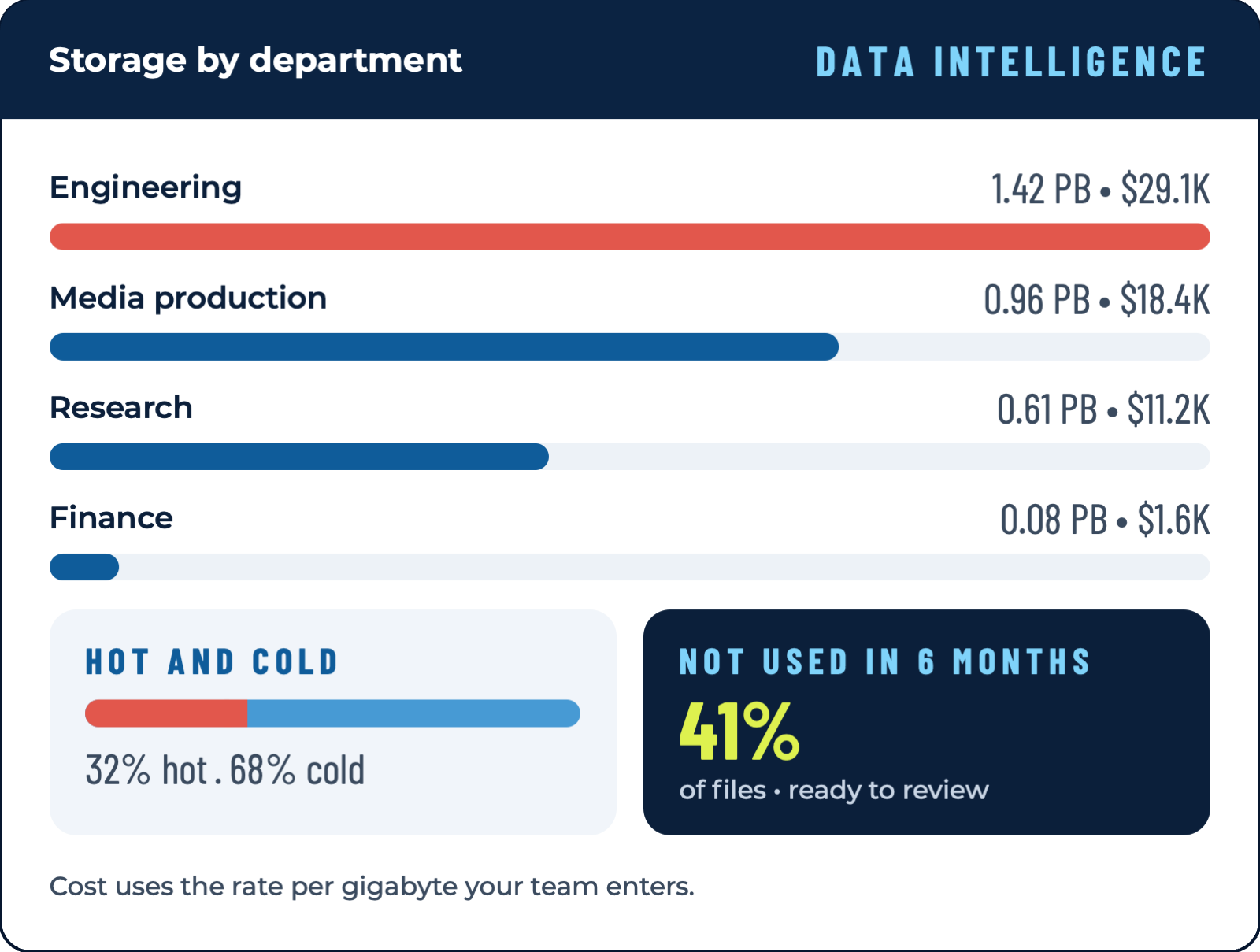
WHO IT SERVES
Four teams, four questions,
one catalog.
Every team asks about storage in its own words. Each answer comes from the same catalog, so the numbers match from one team to the next.
IT and storage teams.
Finance.
Project and research leads.
Governance.
ANALYTICS
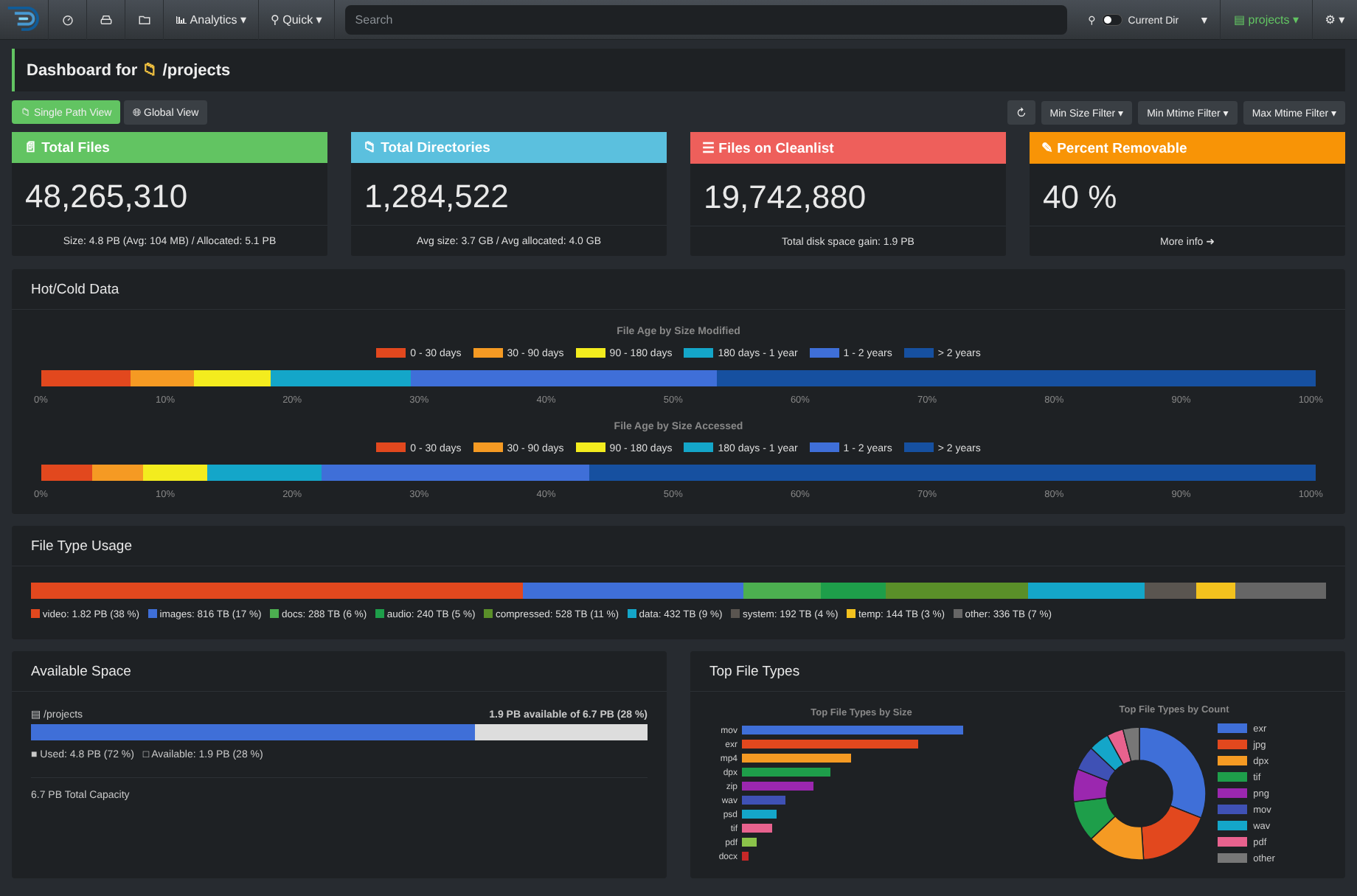
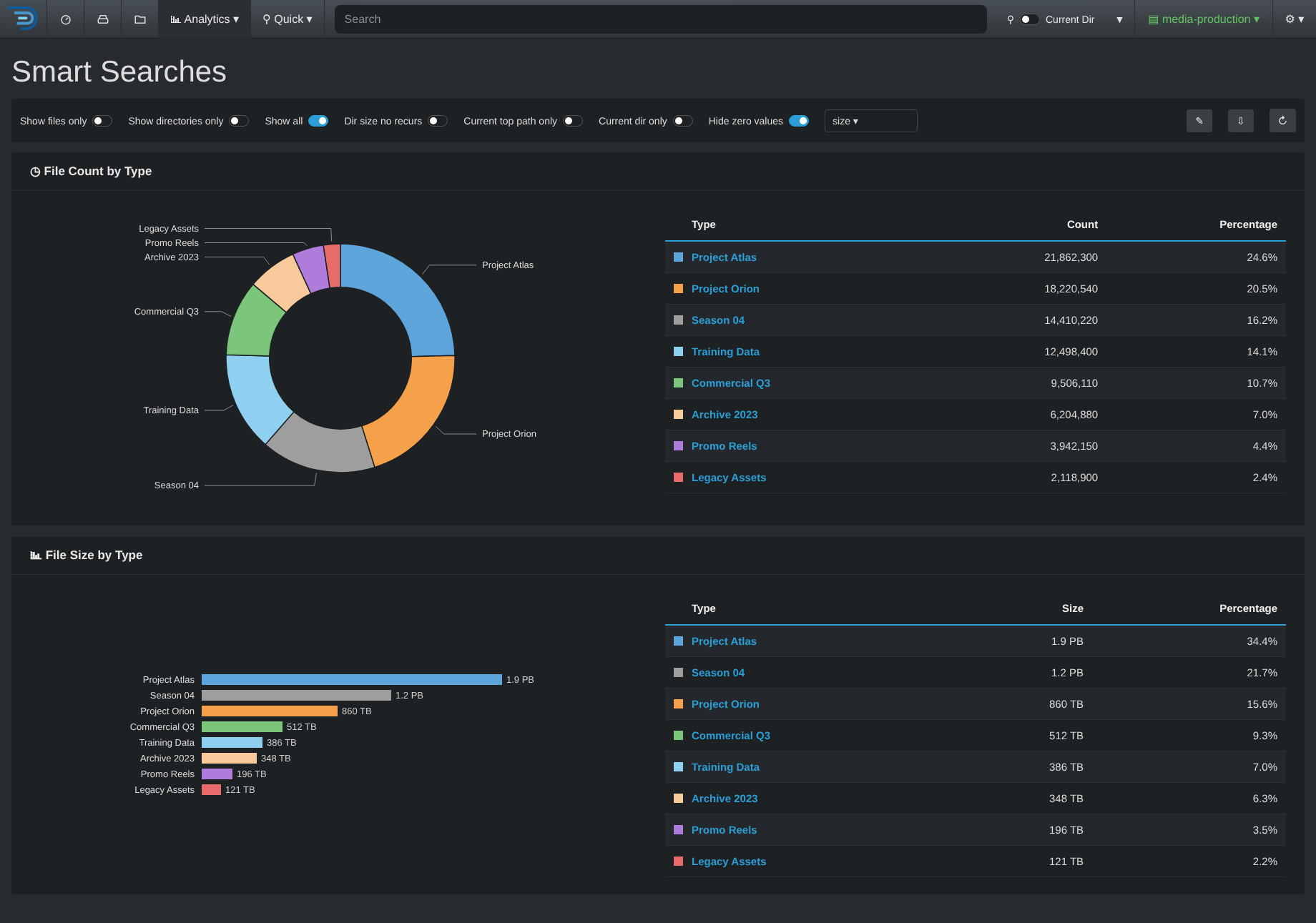
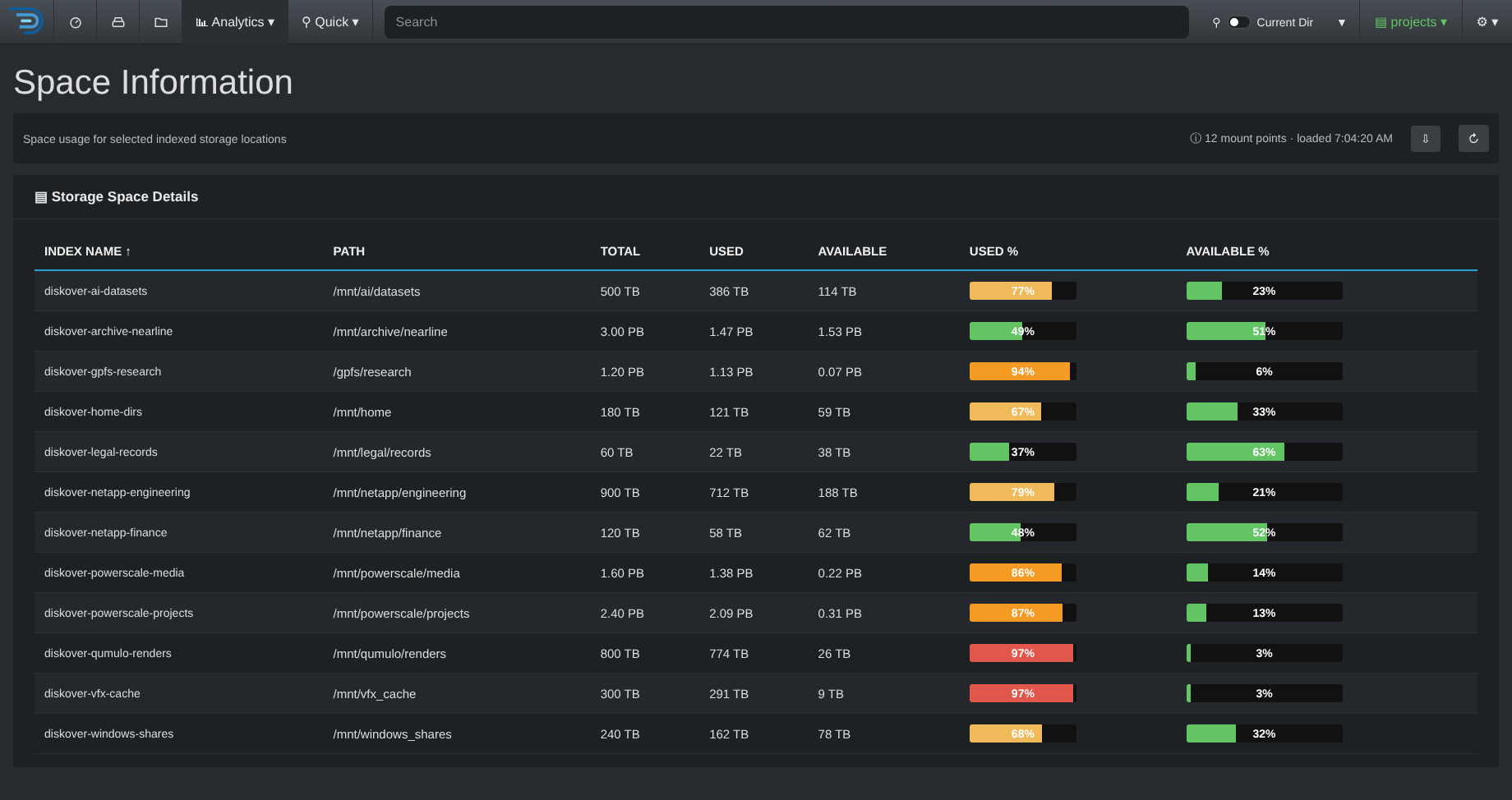
Analytics built on the catalog.

HEATMAP
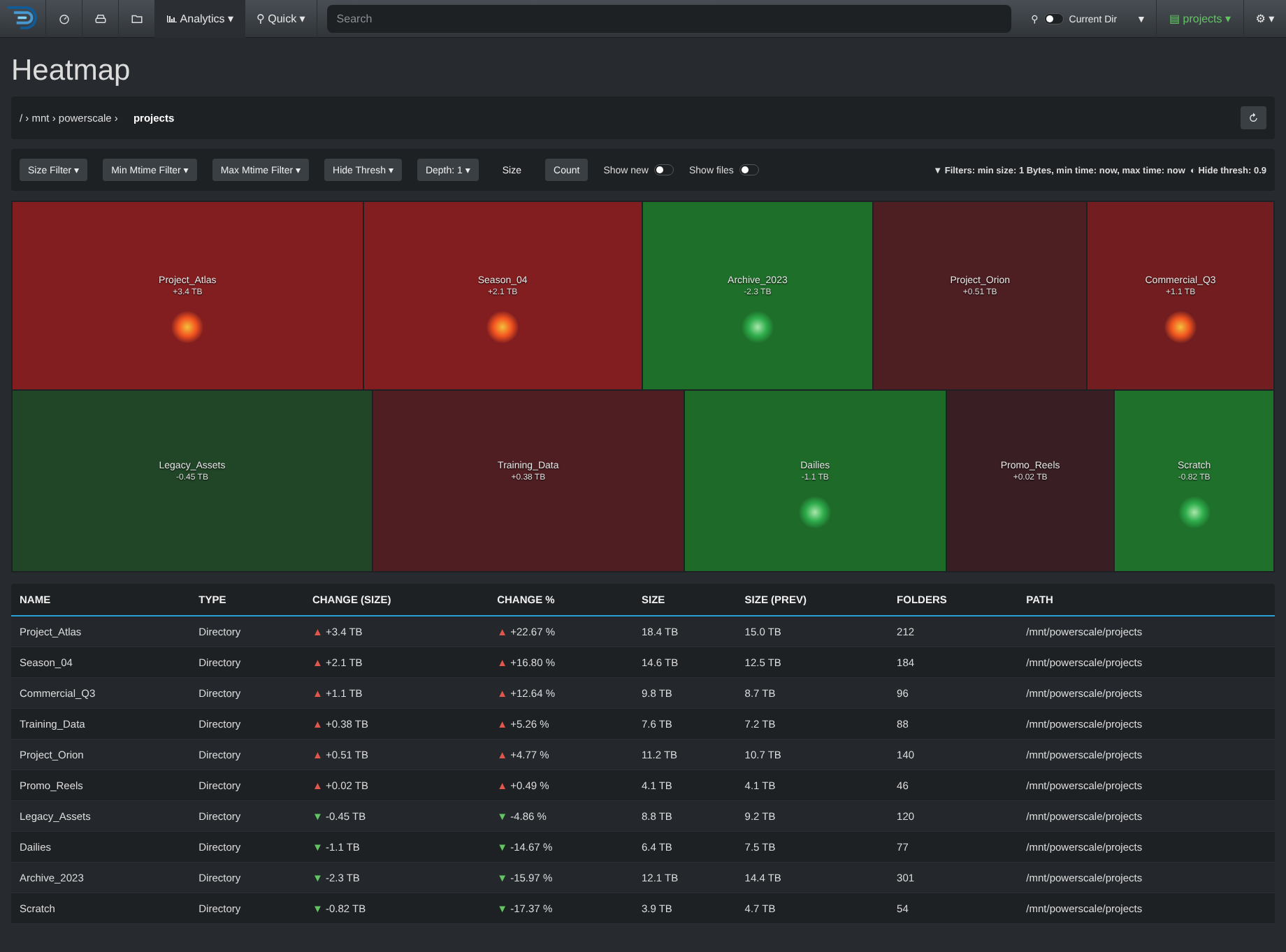
See what changed between two scans.
The heatmap compares two scans of the same system, or two systems, such as on-premises storage and its cloud backup. Growth shows in red and reduction in green, sized by capacity or by file count, so the folders driving growth stand out before the next purchase.
SCHEDULED REPORTS
Reports that arrive on schedule.
Recurring questions deserve recurring answers. A scheduled report runs a saved query after each scan or on a set schedule, then emails the result as a CSV file or writes it as a Parquet file for your analytics tools.
- For the storage team: the largest and oldest files on each tier, every week.
- For finance: capacity and cost by department, every quarter.
- For your lakehouse: the same metadata as Parquet, ready to query. Explore data lakes and lakehouses →
Every Monday, 7:00 AM
cold_by_tier.csv → emailed to storage-team
cold_by_tier.parquet → written to the lakehouse
BI TOOLS
Your storage numbers, in the BI tools you already use.
Storage data becomes more useful next to the rest of the business. Diskover sends catalog metadata where your analysts already work, so they can build storage dashboards in their own tools and join them with project, cost center, or sales data.
One catalog, the same numbers in Diskover and in your BI dashboards.
AI CONNECTOR
Ask your storage a question.
The AI Connector answers plain-language questions from the same catalog, with your group permissions, and recommends a next step for a person to approve.
- Which teams or projects are growing fastest, and on which systems?
- Which project folders have not been modified in 12 months?
- Show storage used by each department, largest first.
- Tag files older than 2 years in the shared drives as archive candidates.
FAQ
Questions about data intelligence.
See it on your own data.
We’ll index a sample of your environment and show you
what’s recoverable against your current storage spend.