

DISKOVER ARCHITECTURE
How Diskover indexes at exabyte scale.
Diskover sits one layer above the storage estate you already own, reading metadata rather than moving or copying data. This page covers how indexing and scale-out architecture work.
One layer above the data estate you already own.
The problem.
Files spread across systems, sites, and clouds. Finding what you need takes days, deciding what to do with it takes longer, and every copy nobody can account for is capacity you keep paying for.
The solution.
Diskover sits above the storage layer. It connects to your filesystems, indexes metadata at speed, and returns one searchable view of what you have, where it lives, and how it is actually used.
Why it matters.
Less time searching for files, capacity you can reclaim instead of buy, and datasets an analyst or engineer can trust on the first pass, whether the next project is analytics or AI.
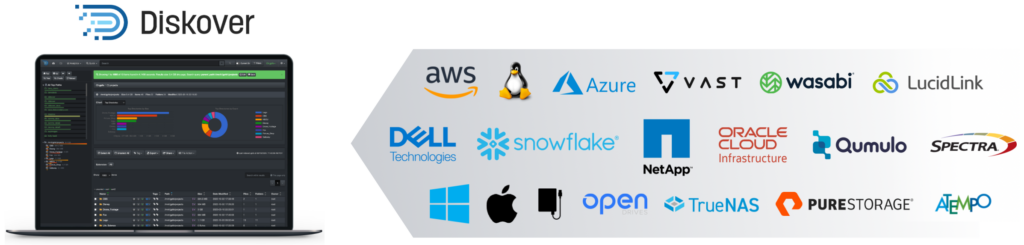
Storage and filesystem agnostic.
How it works.
Diskover connects to on-prem, cloud, and hybrid storage using scanners and plugins that work across different systems.
Why it matters.
You get one consistent view of all your data, without being locked into a single vendor or storage platform.
Fast indexing.
How it works.
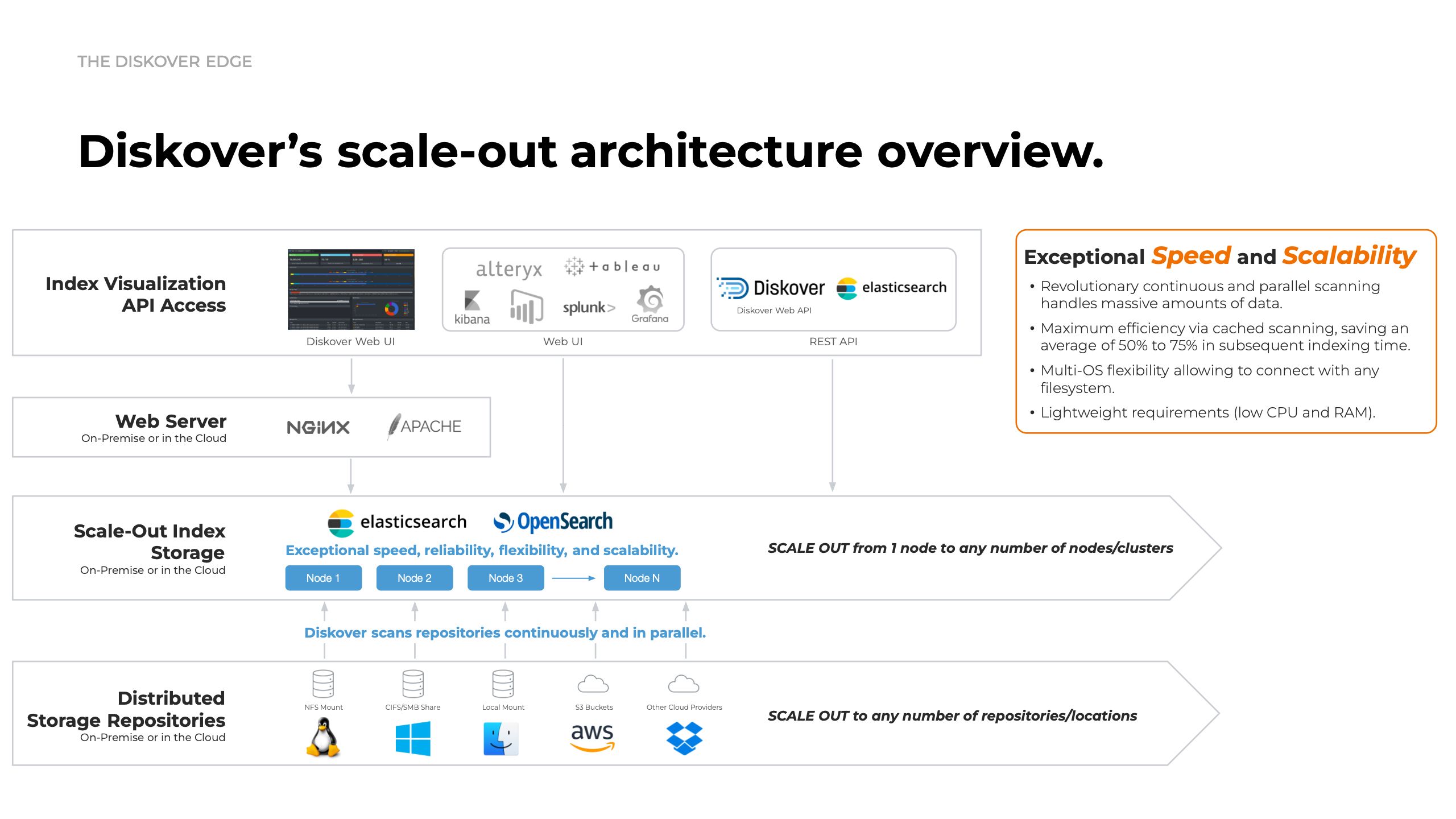
Diskover scans your data in parallel, across many systems at once, using a distributed indexing engine built for scale.
Why it matters.
You can index massive environments faster, keep indexes up to date, and find any file in seconds—even as data keeps growing.
Optimized efficiency with cached scanning.
How it works.
Diskover reuses cached scan results instead of re-scanning everything from scratch.
Why it matters.
Re-indexing runs much faster and uses fewer resources—saving time, CPU, and cost in constantly changing environments.
Unified and enriched metadata catalog.
How it works.
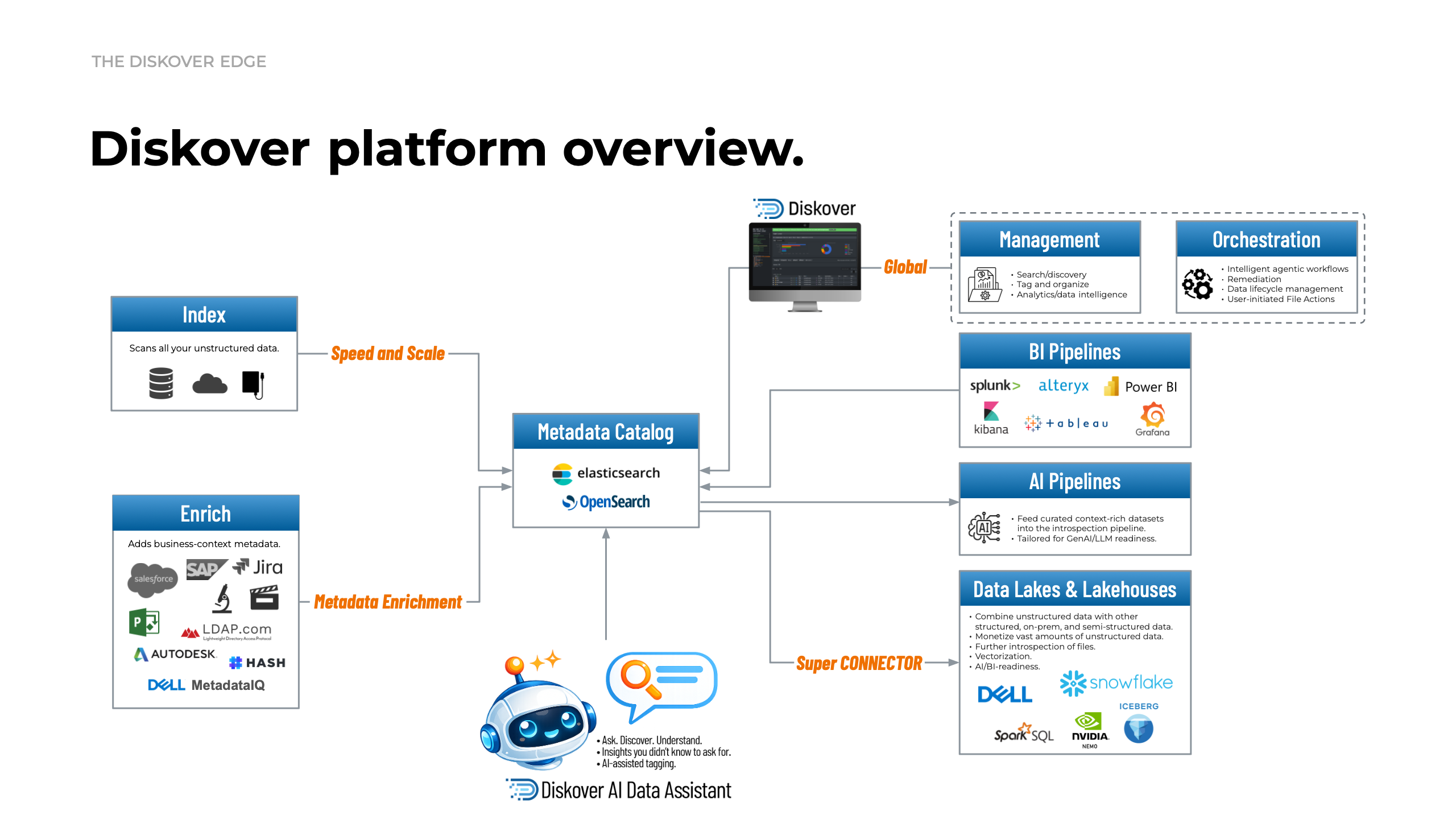
Diskover combines core file metadata with enriched business and technical attributes into one searchable catalog.
Why it matters.
Your data becomes easier to find, understand, and act on—powering smarter decisions, automation, and analytics.
Secure real-time access to live data.
How it works.
Diskover can surface live filesystem changes between index runs through its Live View capability.
Why it matters.
You don’t have to wait for a full re-index to see what’s changing, reducing blind spots and unnecessary delays.
Built for data lakes and AI/ML/BI pipelines.
How it works.
Diskover prepares curated, metadata-rich datasets and integrates with data lakes, lakehouses, and analytics platforms.
Why it matters.
Analytics workflows stay current and consistent, ensuring high-value data delivers reliable, trustworthy results.
AI connector.
How it works.
Built on Diskover’s metadata foundation, the AI connector helps users explore data, ask natural questions, surface insights, and initiate supported actions directly from the platform.
Why it matters.
Teams move from search to insight to action faster—making confident decisions based on high-value data without needing deep technical expertise.
Additional details that make Diskover exceptional.
Made for modern enterprise reality.
Why it matters.
The power of open source and why it matters.
How it works.
Diskover is built on open-source technologies proven at enterprise scale. That foundation delivers fast search across billions of files, room to grow, and connections into platforms like Snowflake and Dell Data Lakehouse.
The result.
One catalog spans every vendor, tier, and site. Index, enrich, and orchestrate unstructured data wherever it already sits, on-premises, in the cloud, or across hybrid environments. Nothing moves to build it.
Why it matters.
An open architecture means you can see how it works, extend it yourself, and adapt as your data strategy changes. The storage you buy next year plugs into the same view, on a schedule you set rather than a vendor.