
PLUGINS for LIFE SCIENCE, GENOMICS, AND HEALTHCARE

BAM Plugin

Grant Plugin

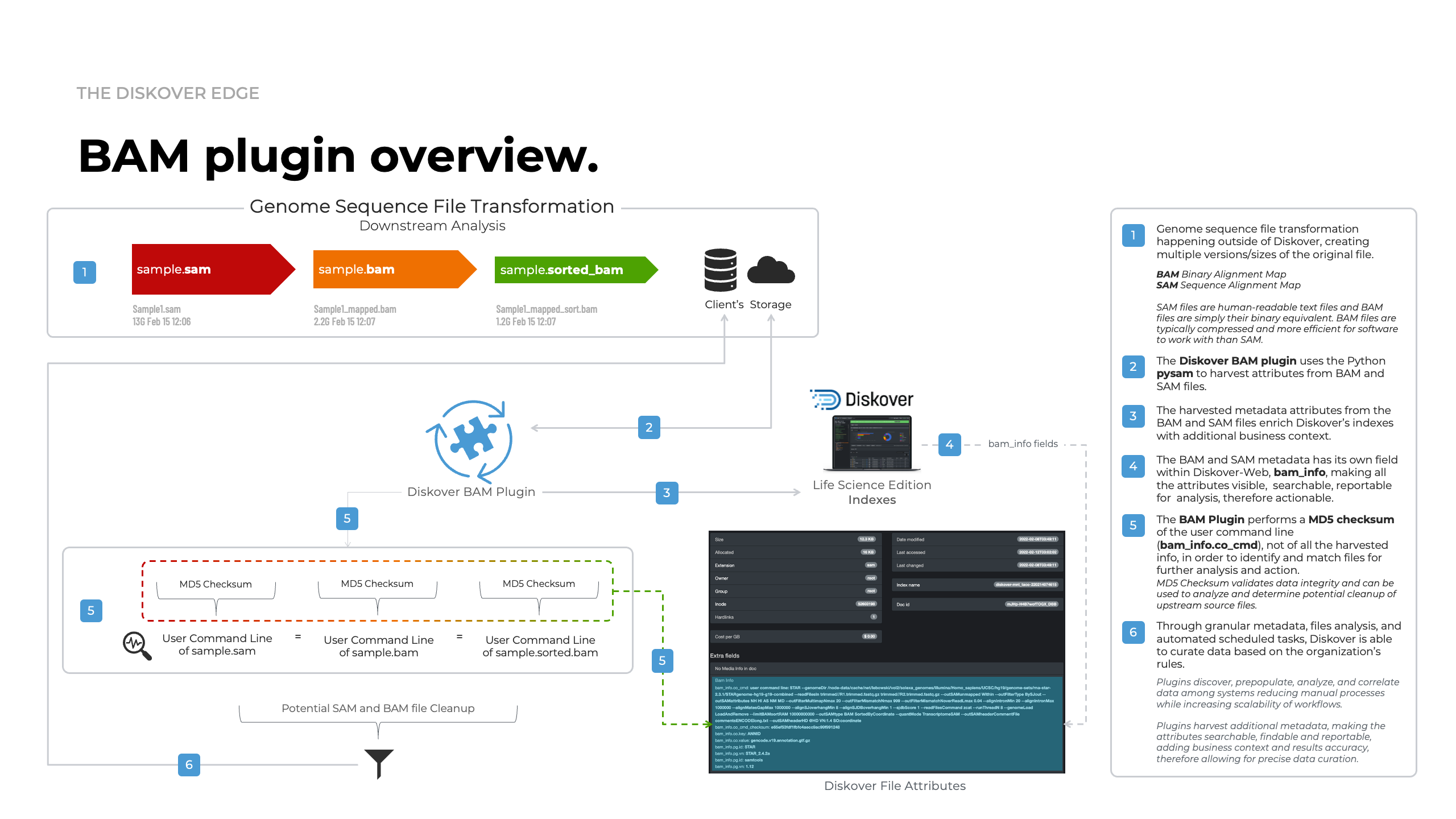
BAM plugin.

The BAM/SAM metadata Eerichment plugin extends Diskover’s indexing capabilities into bioinformatics pipelines by harvesting alignment and command-line metadata directly from BAM and SAM files—without requiring any read/write access, ensuring full data integrity.

Harvests key genomic metadata. Using Python’s pysam, the plugin extracts attributes such as sample ID, sequencing platform, alignment method, and genome build—plus the MD5 checksum of the original command line to verify lineage and detect redundant or derived files.
Enriches Diskover indexes with scientific context. Extracted BAM and SAM metadata are indexed and correlated across datasets, making genomic files searchable, comparable, and reportable without exposing raw data.
Automates lifecycle and analysis workflows. Researchers can leverage agentic workflows to drive policy-based lifecycle management, streamline validation, and surface context-rich data for downstream AI and modeling pipelines.
Transforms static files into actionable insight. Turns unstructured genome sequence data into structured, metadata-rich datasets—ready for analytics, machine learning, and reproducible research.
Accelerates research and reproducibility. Enables teams to quickly trace lineage, validate file integrity, and eliminate redundant data, ensuring confidence in every analysis.
Bridges data management and AI-readiness.
By unifying scientific metadata with operational context, Diskover connects the data that fuels genomic discovery, automation, and AI-driven precision analysis.

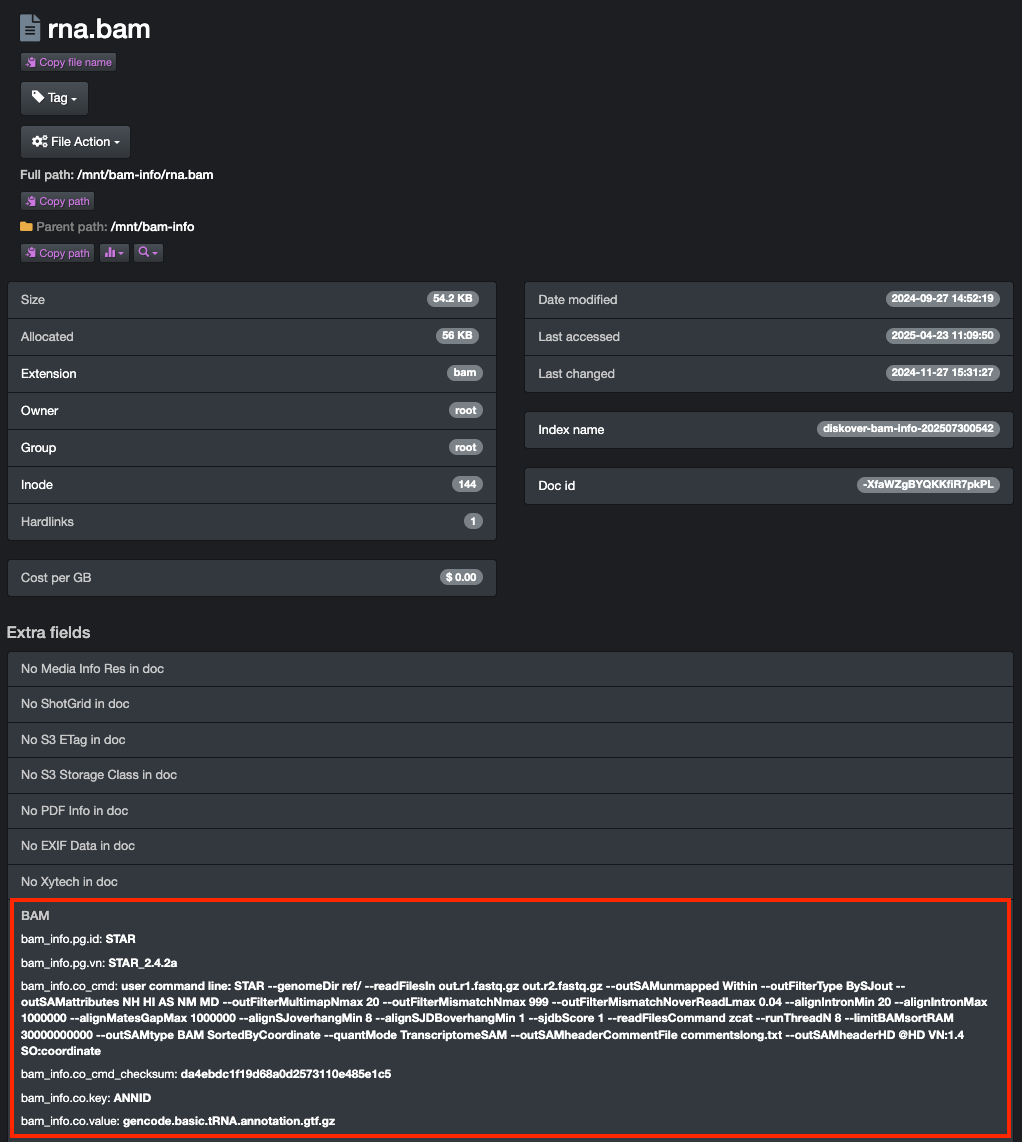
Rich BAM attributes.

Screenshot showing Diskover’s BAM/SAM Metadata Enrichment Plugin in action. The interface displays indexed BAM file attributes and harvested metadata fields, including sequencing platform, alignment method, genome build, and MD5 checksum. These enriched fields make genomic data searchable, reportable, and AI-ready for downstream analysis and automation.

BAM plugin overview.

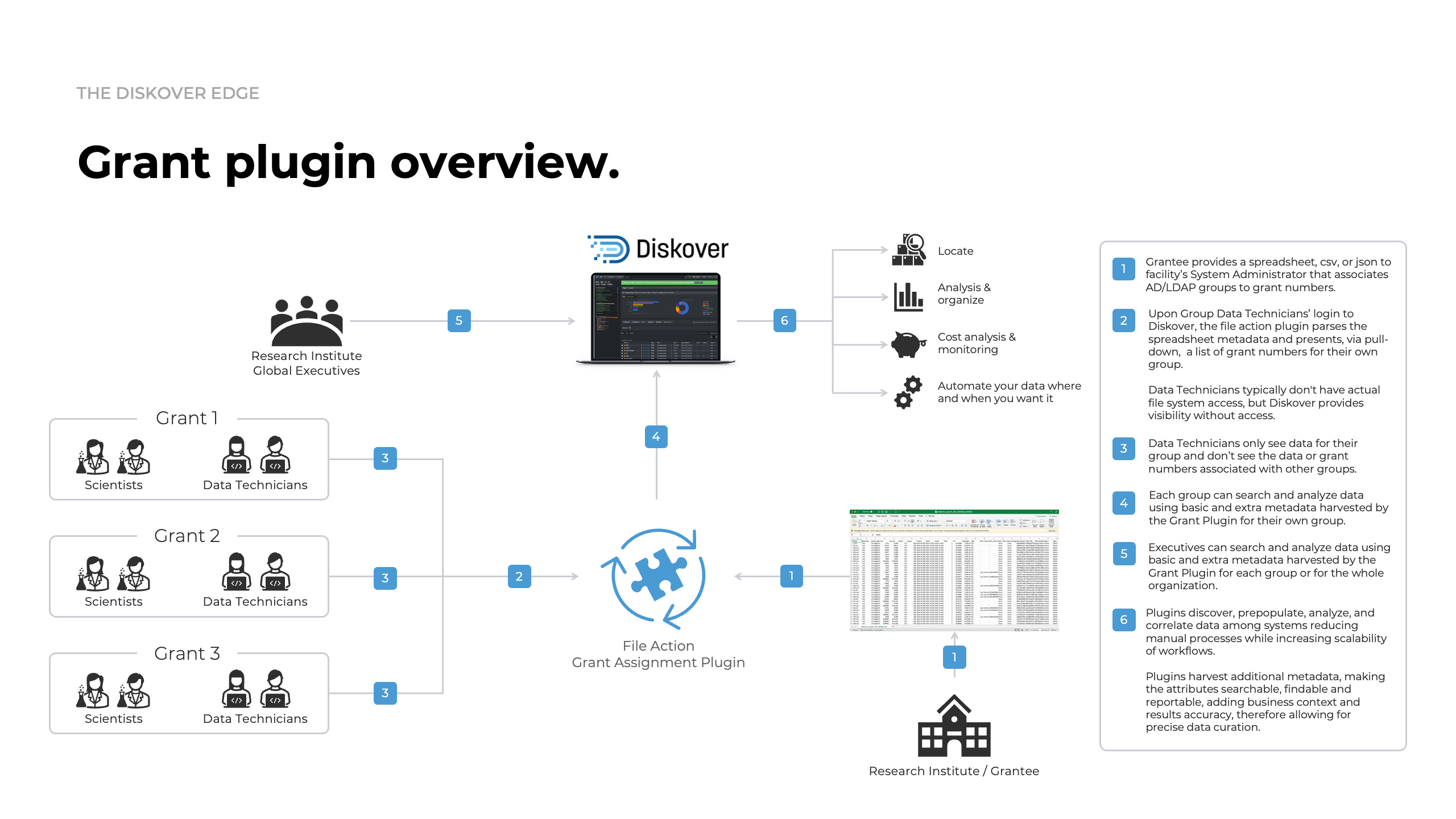
Centralizes grant metadata. Collects and organizes grant IDs, group numbers, and funding references into searchable datasets without requiring access to raw research files.
Associates cost and storage data. Links infrastructure usage and storage costs directly to grants for real-time visibility and fiscal accountability.
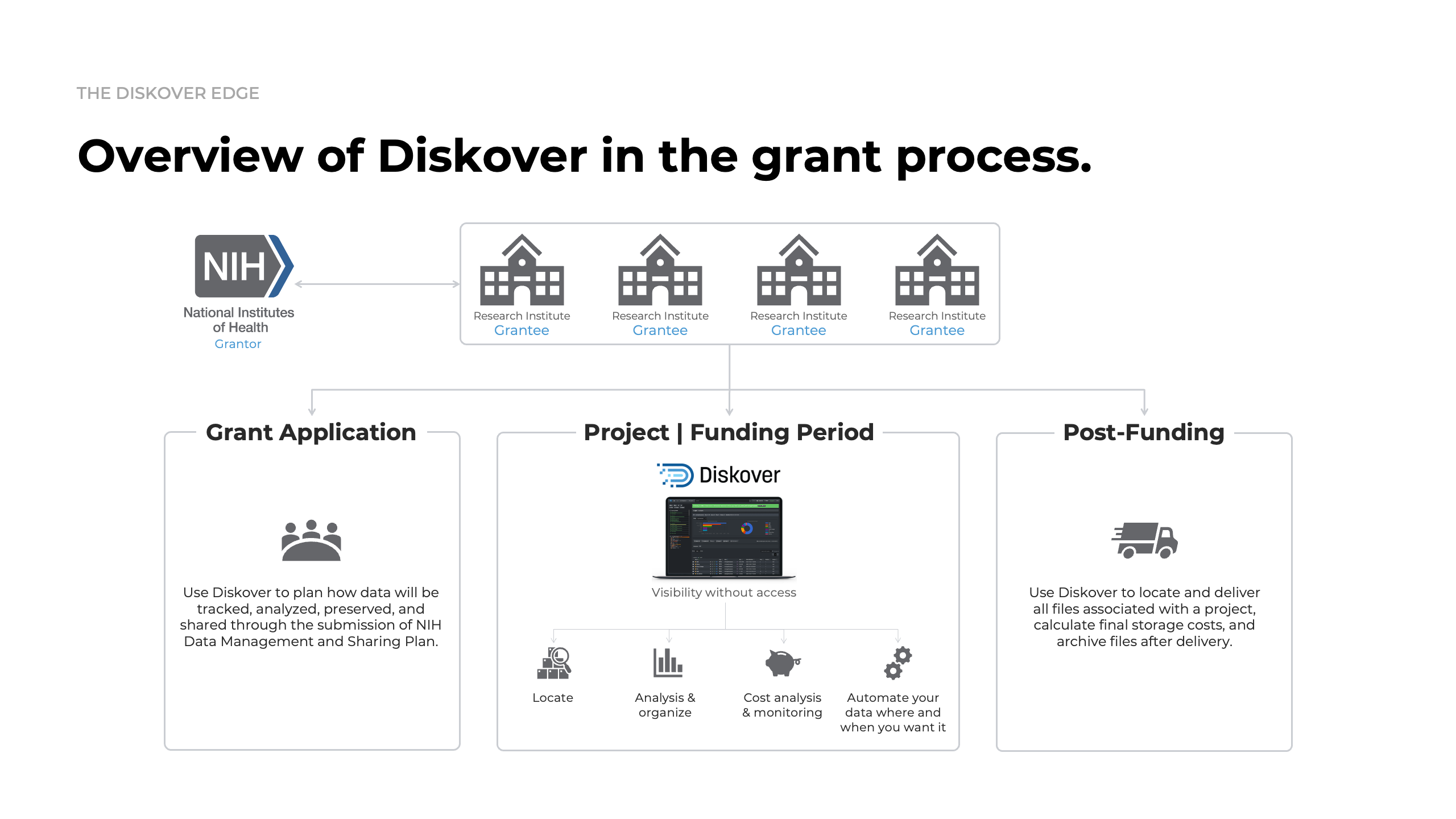
Supports NIH-aligned data management. Maps metadata and lifecycle practices to NIH DMS Policy requirements—from proposal through publication.
Enables policy-driven automation. Uses agentic workflows to automate data curation, retention, and reporting tasks based on grant and project policies.
Maintains integrity and traceability. Keeps research data read-only while associating grants, projects, and datasets through secure metadata mapping.
Simplifies compliance. Helps research teams meet and exceed NIH data-management and sharing requirements effortlessly.
Improves visibility. Provides grant-level insight into data usage, cost, and project outputs without exposing sensitive research content.
Reduces operational waste. Minimizes redundant storage and manual reporting, freeing funds for active research instead of infrastructure.
Accelerates collaboration. Links investigators, datasets, and grant information in one unified index for faster discovery and validation.
Drives accountability through automation. Ensures reproducibility, transparency, and efficient use of grant resources with automated lifecycle tracking.

Ready to bring order to your unstructured world?

Scroll to Top